(English version below)
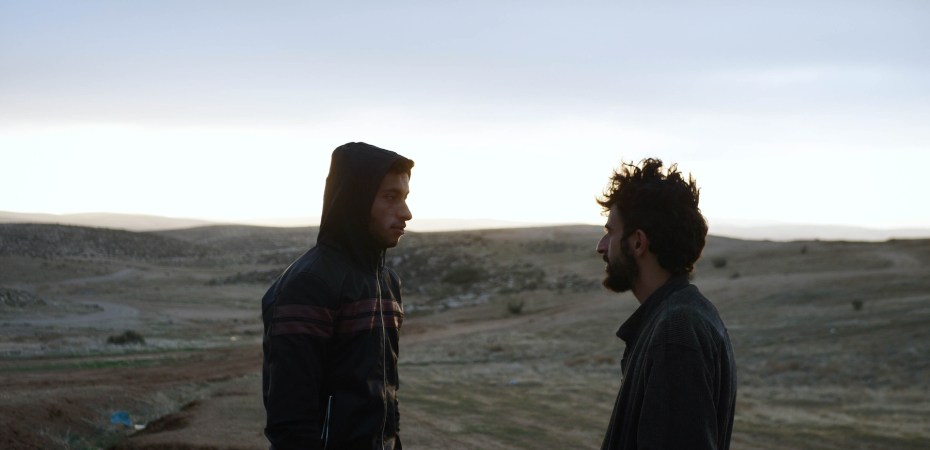
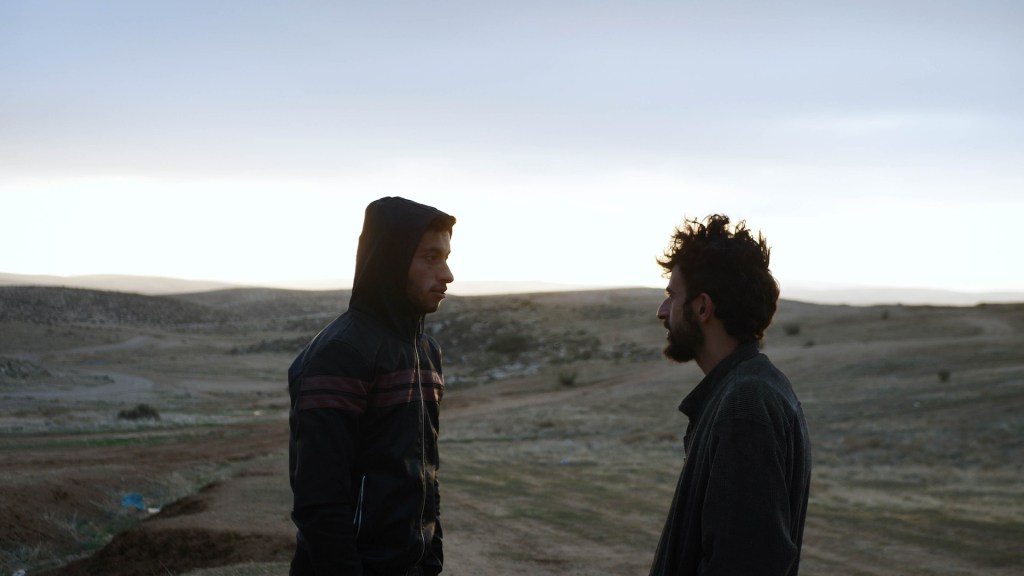
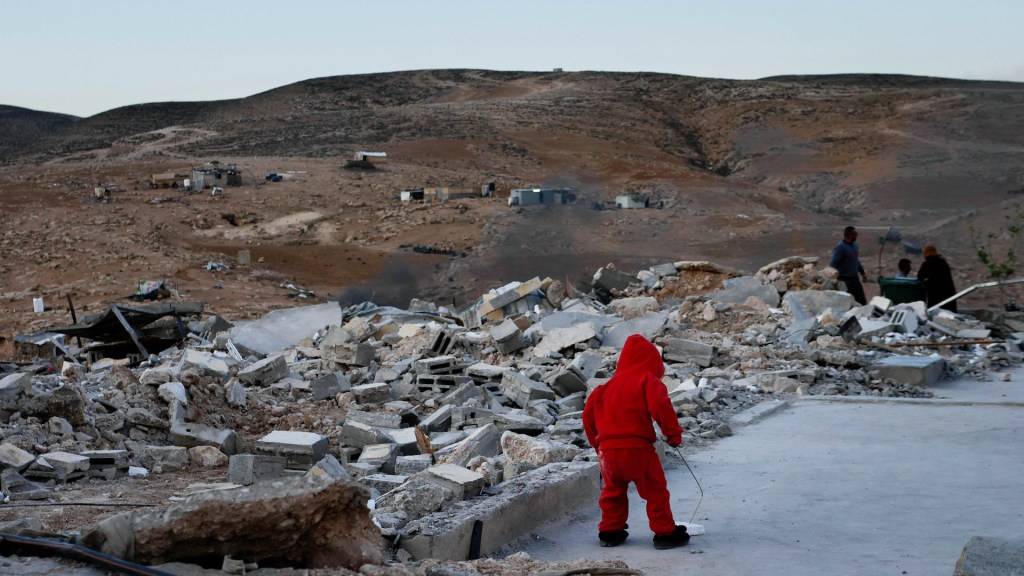
Basel Adra et Yuval Abraham vivent sur la même terre mais n’ont pas les mêmes droits. Autour d’eux, tout est fait pour les opposer. Le premier est Palestinien de Cisjordanie, où les habitants voient leurs maisons régulièrement détruites par l’occupation israélienne. Le second est Israélien, et chez lui les habitants ont le droit de vivre et circuler comme bon leur semble. De leur rencontre est né No Other Land, film collectif fait d’images d’archives récentes et moins récentes, qui raconte l’apartheid par ceux et celles qui le vivent. Documentant l’injustice pour œuvrer à la liberté et l’égalité de tous sur cette terre-là, voici une œuvre importante qui cherche à unir au lieu de diviser.
Version intégrale – interview par Zoom, parue dans L’Avenir et Surimpressions.be
.
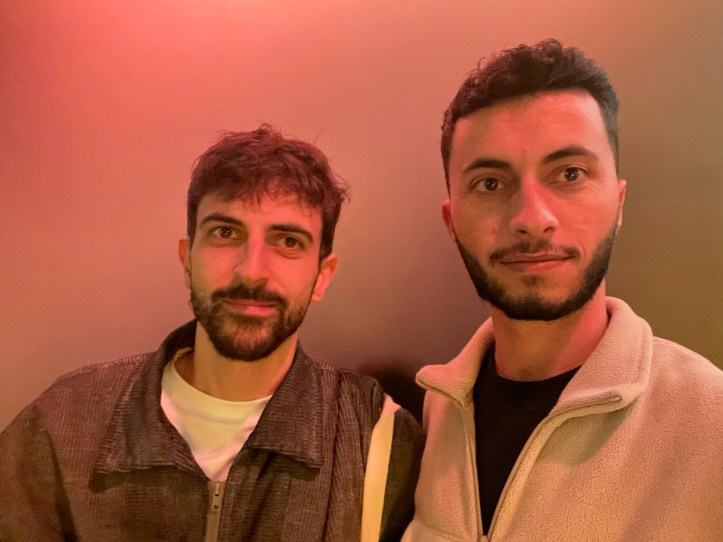
Basel Adra, Yuval Abraham, bonjour, enchantée et désolée pour tout ce qui se passe actuellement. Vous avez beaucoup voyagé et fait énormément d’interviews pour ce film, j’imagine que vous êtes épuisés. Avant tout donc, comment allez-vous ?
Basel Adra : Fatigués, oui, mais c’est bien de faire ce travail, c’est important. Hier soir le film a été projeté devant plus de 1000 personnes (à Amsterdam, dans le cadre de l’IDFA NDLR). C’est bien que le film soit vu, c’est au moins quelque chose de positif.
Yuval Abraham : Oui, après 5 ans à documenter tout ça sur le terrain, c’est une toute autre expérience maintenant d’être hors de ça, et de partager notre travail avec le monde après avoir passé tant de temps à travailler dessus. Bien sûr c’est très frustrant d’être ici tout en sachant que chez nous, les choses empirent. Mais nous sommes heureux que le film suscite de l’intérêt.
Le film été projeté pour la première fois au Festival de Berlin en février dernier, où il a remporté le prix du meilleur documentaire. Vous attendiez-vous ou espériez-vous autant d’attention ? Qu’est-ce qui revient le plus dans les retours de projections, comment sentez-vous que le film impacte les gens ?
Yuval : Le prix à Berlin était une grande surprise. Je me souviens de Basel et moi assis côte à côte dans la salle, très stressés, et soudain ils ont prononcé nos noms, et on s’est dit, wow. C’est un moment de ma vie que je n’oublierai probablement jamais . Jusqu’ici, le film a surtout été projeté en festivals, et le public qui va le voir est déjà relativement sensibilisé au sujet de l’occupation, et comprend qu’il se passe quelque chose de très injuste. C’est important bien sûr que ces personnes voient le film, mais j’espère que celui-ci parviendra à atteindre aussi un public plus large, en Europe et dans le monde. C’est précisément ces gens-là que nous voulons atteindre, et j’espère que si le film continue ce voyage, il arrivera à toucher les gens qui ne sont pas déjà convaincus. Pour l’instant, l’accueil du public en festival a été très positif ; il y a toujours un profond silence dans la salle après la projection, beaucoup de gens pleurent… Ca nous montre que le film fonctionne, pas seulement cinématographiquement, mais qu’il arrive à représenter la réalité d’une manière qui touche le public.
Le film est sorti au cinéma à Athènes en octobre, c’est là que je l’ai vu.
Yuval : Y a-t-il encore des projections ?
Oui, j’ai vérifié avant notre interview d’aujourd’hui (le 18 novembre, NDLR) et il est encore à l’affiche dans deux cinémas du centre.
Yuval : Sympa.
Et quand j’y suis allée, la salle était pleine, des jeunes et des moins jeunes… il restait seulement 2 sièges vides, et une file de gens attendaient la prochaine projection quand nous sommes sortis.
Basel : Wow, c’est génial.
Yuval : Nous ne savions pas qu’il marchait bien en Grèce, wow !
C’est le cas, et par ailleurs le week-end dernier était aussi le dernier week-end du Athens Palestine Film Festival. Il y a beaucoup d’actions pour la Palestine en Grèce.
No Other Land est une œuvre collective, où les choix cinématographiques et politiques ont été pris collectivement. Comment avez-vous travaillé à cela ?
Basel : Le film est pour nous un acte de résistance collective. Nous sommes amis et activistes, et nous travaillons ensemble. On n’a pas fait le film juste pour “faire un film”. Personnellement, je filme la situation autour de moi depuis des années sans penser que je vais en faire un documentaire. C’est pareil pour Hamdan (Ballal, co-réalisateur palestinien du film, NDLR). Ça fait partie de mon activisme. Yuval et Rachel (Szor, co-réalisatrice israélienne du film, NDLR) sont journalistes, et on s’est rencontrés il y a 5 ans quand ils sont venus dans notre région pour effectuer un travail journalistique sur la situation. Ils ont continué à venir à Masafer Yatta, et de fil en aiguille nous sommes devenus proches. Un jour où on était tous ensemble, Hamdan a lancé cette idée de réaliser un film à partir des dizaines d’heures de documentation que nous avons, pour soutenir la situation et la communauté. Malheureusement aujourd’hui la situation est très différente, comme on le sait. Mais l’intention première de ce film est un travail activiste. Politiquement, nous partageons quasiment les mêmes valeurs, et les décisions prises dans le film sont prises de manière collective : si l’un de nous quatre n’est pas d’accord, on ne le fait pas.
« Nous montrons la différence de traitement entre nous – pour appeler à changer cela »
Le film montre de façon puissante la différence de traitement, l’apartheid et l’occupation à travers des faits et des images indéniables. Mais parfois, la façon dont le film a été accueilli illustre l’inégalité de traitement entre Israéliens et Palestiniens. Je pense notamment à ce qui s’est passé à Berlin, et la réaction de la Ministre de la Culture allemande Claudia Roth… Le film continue de prouver son propos au-delà de ce qu’on voit à l’image.
Yuval : Oui, on adore, parce qu’en un sens, la Ministre de la Culture allemande a illustré parfaitement notre discours. Quand nous avons reçu le prix du meilleur documentaire à Berlin, nous avons parlé d’apartheid et de discrimination : Basel et moi n’avons pas les mêmes droits, nous ne pouvons pas conduire sur les mêmes routes, etc. Et puis elle a reproduit elle-même cet apartheid, elle a fait une sorte de « clapartheid » (LOL, NDLR) en disant qu’elle « n’applaudissait que pour l’un d’entre nous », ce qui est très bizarre… C’est ironique, bien sûr nous sommes tristes de voir ce genre de racisme, mais c’est vrai, ça prouve bien ce qu’on montre dans le film, la différence entre nous. Dans le film c’est illustré de façon très intime, à travers notre propre connexion, notre amitié, dans le but d’appeler à changer ça, afin que notre futur soit différent, sans qu’un groupe domine l’autre, mais où il y a égalité et justice pour les deux groupes. C’est ce que nous voulons, et cela n’arrivera pas si malheureusement il n’y a pas de pression de la Communauté Internationale, parce que ça ne viendra pas de l’intérieur malheureusement en ce moment. Mais oui, le film est très politique, et à travers son voyage dans le monde, la façon dont il est accueilli reflète bien le sujet du film.
Lors d’un récent débat en ligne sur le génocide et sur l’importance pour les artistes de s’exprimer parce qu’il y a beaucoup de censure autour de la Palestine, quelqu’un a déclaré qu’« il n’est pas difficile de parler de la Palestine, mais qu’il est difficile de parler d’un génocide là où il n’y en a pas » – prouvant là aussi exactement ce que je voulais dire.
Yuval : Oui le problème est que les discussions n’amènent pas de changement – bien sûr ce qui se passe n’est pas de notre faute, mais il est impératif de se questionner sur ce qu’on peut faire pour impacter la situation actuellement. Parce qu’au fond ce qui est important, ce ne sont pas les paroles : en ce moment il y a urgence, des milliers de personnes risquent de mourir pendant que nous parlons, particulièrement dans le nord de Gaza. On doit vraiment se demander qu’est-ce qu’on peut faire pour amener les gens qui ne sont pas convaincus, ou pas encore dans nos cercles, à nous rejoindre. Pour moi ça veut dire élargir le champ des possibles, et créer des alliances politiques plus larges – car c’est ce qui importe le plus actuellement : arrêter le massacre. Vraiment, il n’y a rien de plus important. Il y a urgence. Ce n’est pas une question d’identité, de politiques internes de chaque pays – là, ce qui urge, c’est de faire le nécessaire. Y compris dans le compromis, peut-être qu’on doit faire ça, pour rapprocher les gens de nous, ne pas les aliéner, parce que les gens à Gaza actuellement n’ont pas le temps. De cette façon j’espère que notre film peut toucher aussi des gens d’un public plus large. Nous voulons vraiment influencer le changement de la façon la plus large possible.
En tant que critique de cinéma et activiste, parler de films quand on voit ce qui se passe me semble insensé – je préférerais sortir, manifester, agir. Mais j’essaie de trouver des films qui apportent du sens, pour inciter les gens à agir ou à s’engager. J’aimerais vous demander quels conseils vous avez à donner aux personnes qui seront touchées par ce film et qui voudront en faire plus, mais en même temps, je ne veux pas vous demander des conseils, parce que c’est à nous d’aider.
Basel : Moi même je n’ai pas la réponse à cette question, mais nous continuerons de faire notre part, montrer le film, parler aux journalistes comme vous, raconter les histoires. C’est important. J’espère que devant ce film, les gens ne se sentent pas juste tristes, mais qu’ils agissent. Sans actes, rien ne change. On a besoin de solidarité, que des gens rejoignent la lutte, pour arrêter ça. Particulièrement les pays dont les gouvernements sont complices dans cela. C’est dur de voir ce qui se passe, les massacres tous les jours, et de parler d’espoir et d’y croire.
Je sais, mais devant ce film, nous sommes tour à tour en colère, tristes, puis nous reprenons espoir – exactement comme les gens dans le film qui voient leur maison détruite, se sentent désespérés, puis la reconstruisent, encore et encore. Devant ce film, comme face à l’horreur à Gaza, on a l’impression d’être sur les montagnes russes, d’aller d’espoir en désespoir. Mais si les gens qu’on voit persévèrent, nous devons persévérer. Ce film nous donne aussi la force de continuer à nous battre, parce qu’il n’y a pas d’autre choix.
Basel : C’est bien. Merci.
ENGLISH VERSION (full interview)
Basel Adra and Yuval Abraham live on the same land but don’t have the same rights. Everything around them is designed to set them against each other. The first is a Palestinian from the West Bank, where the inhabitants see their homes regularly destroyed by the Israeli occupation. The second is Israeli, where the inhabitants have the right to live and move about as they please. Their encounter gave birth to No Other Land, a collective film made from recent and not-so-recent archive footage, which tells the story of apartheid through the eyes of those who live it. Documenting injustice in order to work for freedom and equality for all in this land, this film is an important work that seeks to unite rather than divide.
.
Basel Adra, Yuval Abraham, thank you for this film and this interview and sorry about everything that is happening. You’ve been giving a lot of interviews for this film, and I imagine you must be very tired. First of all, how are you ?
Basel Adra : Yeah, beside tired – it’s good also to do the work, it’s important. We had a big screening here (IDFA Amsterdam) last night, with one thousand and one hundred ppl attending, so this is at least a positive thing happening.
Yuval Abraham : Yeah, for 5 years we’ve been on the ground mostly documenting, and it’s a different experience now to be outside, and to be sharing the work with the world after working on it together for so long. Of course, there is a lot of frustration from the fact that we are here and things back home are only getting worse. But we are happy that there is at least interest in what we did, and in the movie.
The movie was first presented at Berlinale where it received the award for best documentary. Did you expect or were you hoping it would attract such attention ? What are people giving back to you in terms of feedback, what impact has the film made ?
Yuval : In Berlin, we did not expect to win, it was very surprising. I remember me and Basel sitting in the audience, we were very nervous… and suddenly they called our names, and we were like, wow, okay. It’s one of the moments I will probably never forget in all my life. Until now, the film has mainly been seen in festivals, and I think the audience who goes to watch is people that are already receptive or care about the occupation and understand there is something very wrong happening. It’s important to reach those people as well, but I am hopeful the film will manage to break through also to more mainstream audiences, in Europe and all over the world. I’m not sure it has yet, and it is precisely those people we want to reach. I hope that the film continues in this journey, that it will manage to reach the people who are not already convinced. For now, the reception has been very good, from the audiences, people, you know, we always feel the room after each screening, there’s always such a strong silence, a lot of people are crying… So that shows us the film is working, not only as a film, but that it’s managing to portray reality in a way that is managing to touch the audience.
The film was released in Athens in the cinemas in October, that’s where I saw it.
Yuval : Are there still screenings there ?
Yes, I checked before the interview today (nov 18) and it’s still playing in 2 cinemas in the center.
Yuval : Nice.
And when I went, the room was full, young and old people, only 2 seats were empty, and people were waiting for the next screening when we got out.
Basel : Wow, it’s great.
Yuval : We didn’t know it’s doing well in Greece, wow !
It does and last weekend was also last weekend of the Athens Palestine film festival. Lots of actions for Palestine are happening in Greece.
No Other Land is a collective work. You had to make cinematic as well as political choices in the film as a collective, how did that work ?
Basel : The movie for us is an act of collective resistance, all together. It’s not about filmmaking, like we are just doing the documentary and working on the film just to do this film, but it’s part of our activism, that we believe in. For me, I’ve been filming the situation around me without thinking I’m going to do a documentary. I started as a teenager, the same for Hamdan (Ballal, the palestinian co-director). Yuval and Rachel (Szor, the israeli co-director) work as journalists, they came 5 years ago to the area, not also in purpose to do a documentary, but to do journalism work , to write articles about the situation. We became close to each other because they came once but then kept coming to Masafer Yatta. And once we were sitting together, Hamdan brought this idea of making something like a documentary or film out of all the footage that we have which is thousands of hours of documentation. We agreed, in the purpose to – this will help the situation and the community. Unfortunately, today it is different, the situation has changed. But the main purpose was to do this as activism work, so politically we almost share the same values, and we agree, and the decisions made in the documentary are made by the 4 of us. If we all agree, we do it, but if one of us doesn’t agree on something, we don’t do it. We are activists doing the work together. So the decisions were made in this way.
« We hope our film can reach people from the mainstream audiences as well, because we really want to influence change in the broadest sense possible. »
The film shows in powerful images the difference of treatment, the apartheid and the occupation, through facts and images. The reception around the film shows the inequality also – we see the inequality in the movie, and then the way the movie has been received, the way people treat you differently, also illustrates this injustice. Especially the way the German government reacted after the award in Berlin, and the insane statement of Culture Chancellor Claudia Roth about ‘clapping for one and not the other’ thing – the film actually continues to prove its point.
Yuval : We like that because in a way the cultural minister of Germany proved our speech : we spoke about apartheid and discrimination in our [acceptance] speech, and then she basically did a « clapartheid » sort of thing : she clapped only for one. Which is… really weird. It was for us very ironic, and of course it’s sad to see this kind of racism, but you’re right, it proves what we are showing in the film, and we are showing it, for us, in a very intimate way, through our own connections, through our own friendship, to show the difference between us – and to call to change it ! So that we have a different kind of future, one where there is not one group dominating the other, but where there is full equality and justice for both groups. This is what we want, and this is not going to happen if there is no pressure from the international community because it’s not going to come from inside right now, unfortunately. But yes, the film is very political, and it comes out to the world, and also the journey that it’s doing is reflecting what the film is about, yeah.
I had a recent argument online about the genocide, and why it’s important for artists to speak out because there is a lot of censorship, and someone commented « it’s not difficult to talk about Palestine but it’s difficult to talk about a genocide where there isn’t one » – proving exactly my point.
Yuval : Yeah, people talk, but the talk is not leading to any change, and of course it’s not our fault, but I think we should ask ourselves critically what can we do differently to cause change, because at the end of the day for me, what is most important is not the words or what we say, it’s how it affects reality. And because it’s so urgent, because as you said, hundreds of thousands of people are at risk of dying right now, especially in the North of Gaza, we really have to ask ourselves, what can we do to get people who are not already convinced, that are not in our circles, to move towards us ? For me, if that means creating broader political alliances, so be it – cause that’s the most important thing right now, to end the slaughter, really. There’s nothing more important than that. It’s not about us, it’s not about our identities, it’s not about the internal political issues in each country. It’s about making the right amount of … even compromises – maybe we have to make… to bring people closer to us, not to alienate them, because the people in Gaza right now don’t have time. This way I hope our film can reach people from the mainstream audiences as well, because we really want to influence change in the broadest sense possible.
As a film critic and activist, sometimes talking about movies while we see what’s going on feels pointless – I would rather go out in the street and protest. But I try to find movies that make sense to get people to act or connect. I want to ask what advice you have for people who will be touched by this film and want to do more, but at the same time I don’t want to come to you for advice, because we should be the ones helping.
Basel : I don’t know myself what to advise you – but at least we will continue to do our part, to show the movie, to speak, through journalists like you, telling the stories. It’s important. I hope that people don’t just see things and feel sad, they need to act. Without action, nothing would change. We want people to join the struggle and the solidarity to stop this. Especially in governments that are complicit in this. It’s hard to see people being massacred every day and speak about hope, learning and changing.
I know, but watching this movie, we are angry then sad, then regain hope – exactly like the people in the movie seeing their house destroyed, feeling desperate, then building it again, over and over. Watching this movie, like seeing what is happening in Gaza, feels like a rollercoaster of hope and despair – up and down, up and down. But if the people don’t stop, we can’t stop. This movie gives us strength also, to keep fighting, cause there is no other choice.
Basel : This is good. Thank you.
NO OTHER LAND, by Basel Adra, Yuval Abraham, Hamdan Ballal, Rachel Szor.
More info : https://www.autlookfilms.com/films/no-other-land
En savoir plus sur Elli Mastorou
Abonnez-vous pour recevoir les derniers articles par e-mail.
 Elli Mastorou